

It’s one thing to follow a schedule, but it’s another to perform each movement with confidence and good form. Nailing your technique is what really builds strength and keeps you safe from injury.
Think of this section as your personal form-check guide for the foundational exercises in this plan. We’ll break down the “how” and “why” behind each one so you can move safely and get the most out of every single rep.
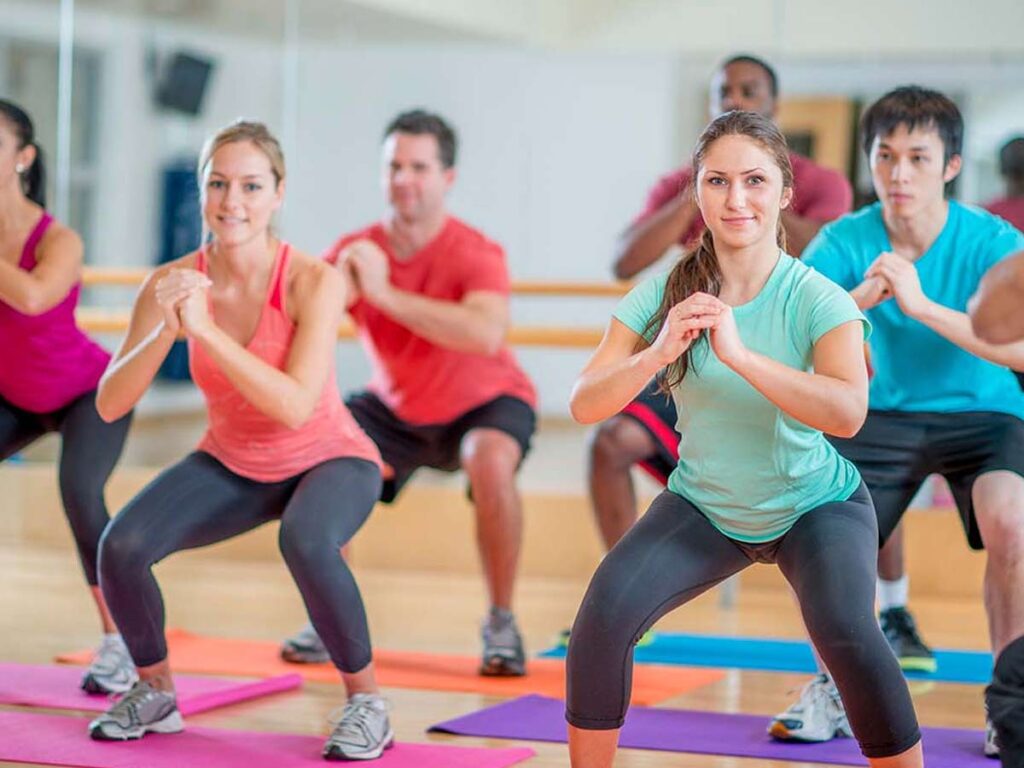
This entire plan is built on bodyweight movements, which means you don’t need a garage full of fancy equipment to get started. The power is in mastering the fundamentals, and a simple yoga mat is more than enough for now.
The Bodyweight Squat
The squat is a true powerhouse. It works your entire lower body and core, and since it’s a fundamental human movement, getting it right pays off both in and out of your workouts.
How to Do It:
- Start by standing with your feet about shoulder-width apart, with your toes pointing just slightly outward.
- Keep your chest held high and brace your core. Now, send your hips back and down like you’re about to sit in a chair.
- Lower yourself until your thighs are parallel to the floor—or as low as you can comfortably go while maintaining good form.
- Drive through your heels to push yourself back up to the starting position. Give your glutes a good squeeze at the top.
- Make it easier (Regression): Hold onto a sturdy chair or countertop for balance. You can also reduce your range of motion by only going halfway down.
- Make it harder (Progression): Slow it down! Take a full three seconds to lower yourself and one second to stand back up. This increases the time your muscles are working, and you’ll definitely feel the difference.
The Push-Up
Don’t be intimidated! Push-ups are one of the absolute best upper-body exercises you can do. They build strength in your chest, shoulders, and triceps while firing up your core at the same time.
Key Form Cues:
- Hand Placement: Put them slightly wider than your shoulders.
- Body Line: Your body should form a straight, rigid line from your head all the way to your heels (or your knees, if you’re modifying). The biggest mistake is letting your hips sag down or pike up toward the ceiling.
- Elbow Position: Avoid flaring your elbows straight out to the sides. Instead, tuck them back at roughly a 45-degree angle to your body.
A common mistake is rushing through them. It’s all about controlled movement—lower your chest toward the floor, and then push back up with power.
Master the basics first. It is far more effective to perform 8 perfect knee push-ups than 15 sloppy, full push-ups that put your shoulders at risk. Form is everything.
- Make it easier (Regression): The incline push-up is a fantastic place to start. Place your hands on a wall, a kitchen counter, or a sturdy sofa. The higher the incline, the easier it will be. You can also perform push-ups from your knees.
- Make it harder (Progression): Once you can comfortably nail 12-15 knee push-ups, it’s time to try a full push-up from your toes. Don’t worry about busting out a ton at first—just aim for one or two perfect reps.
The Plank
The plank is what’s known as an isometric exercise, which just means you hold a static position instead of moving. It’s an incredible tool for building deep core stability, which is essential for supporting your spine and improving your posture.
How to Hold It:
- Get down on your forearms, making sure your elbows are stacked directly under your shoulders.
- Extend your legs straight back, resting on the balls of your feet.
- Now, squeeze everything! Engage your core, glutes, and quads to create that straight, solid line from head to heels.
- Hold this position tight. Don’t let those hips drop or rise.
- Make it easier (Regression): Simply perform the plank from your knees instead of your toes. This shortens the lever and reduces the demand on your core while you build that foundational strength.
- Make it harder (Progression): Ready for a challenge? Try lifting one foot off the ground for a few seconds, then switch to the other leg. This forces your core to work overtime to keep you stable.
These movements are just the starting point. As you get stronger and more confident, you can explore more options. For some great ideas, check out our guide on 8 at-home exercises to stay fit without the gym
